Cinematic mirror product effect styling is the fastest way to make a phone photo of your product look like it came from a studio budget you do not have. The recipe is short: one hero item, one reflective surface, and one hard light. A slightly warped reflection reads as premium, yet the frame stays clean enough to work as a Reel cover, a carousel slide, or a paid social still.
What makes the look pull its weight is that the reflection does real selling. It hands the shopper a second angle, pulls out texture, and builds a little tension before a single word of copy lands. Your job is to keep the actual product crisp and let the mirror do the strange, cinematic part.
This guide is written for small brands shooting on a phone. Everything below can be staged on a kitchen table with a piece of chrome, a flashlight, and a dark cloth. Four looks, two of them illustrated, plus a shot brief you can copy straight into your notes.
Why the cinematic mirror product effect works
A perfect, flat reflection just looks like a catalog. The moment you swap in a wavy mirror, a rippled acrylic sheet, or a folded chrome card, the mood changes. The distortion suggests movement even in a still image, and the bent reflection can reveal a label edge, a closure, or a silhouette that your main angle hides.
That said, this is still commerce. The shopper has to be able to inspect what they are buying, so the mirror is a styling device, not camouflage. Keep the product name, the color, and any material cue readable. If someone cannot tell what the thing is in one second on a phone screen, the reflection is winning and the sale is losing.
Setup is simple. Start with a dark background and one hard source placed slightly above and to one side. Do not fill the shadows. Leave one half of the frame quieter than the other, because that negative space is where a price, a launch date, or a three-word hook will sit once the still becomes an ad. If you want to compare this against non-mirror setups, our guide to glass reflection product looks with phone setups covers the flatter, glossier cousin of this technique.
Four luxe mirror looks to try
Each look below names a real product category, a surface, and a light direction. Steal the one closest to what you sell and change only the color and finish.
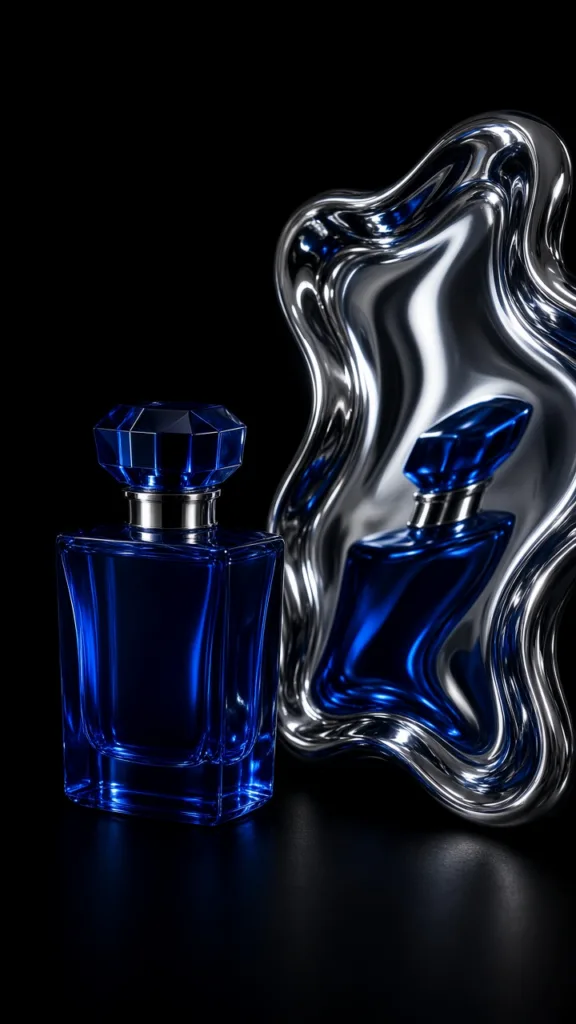
1. Cobalt fragrance on chrome
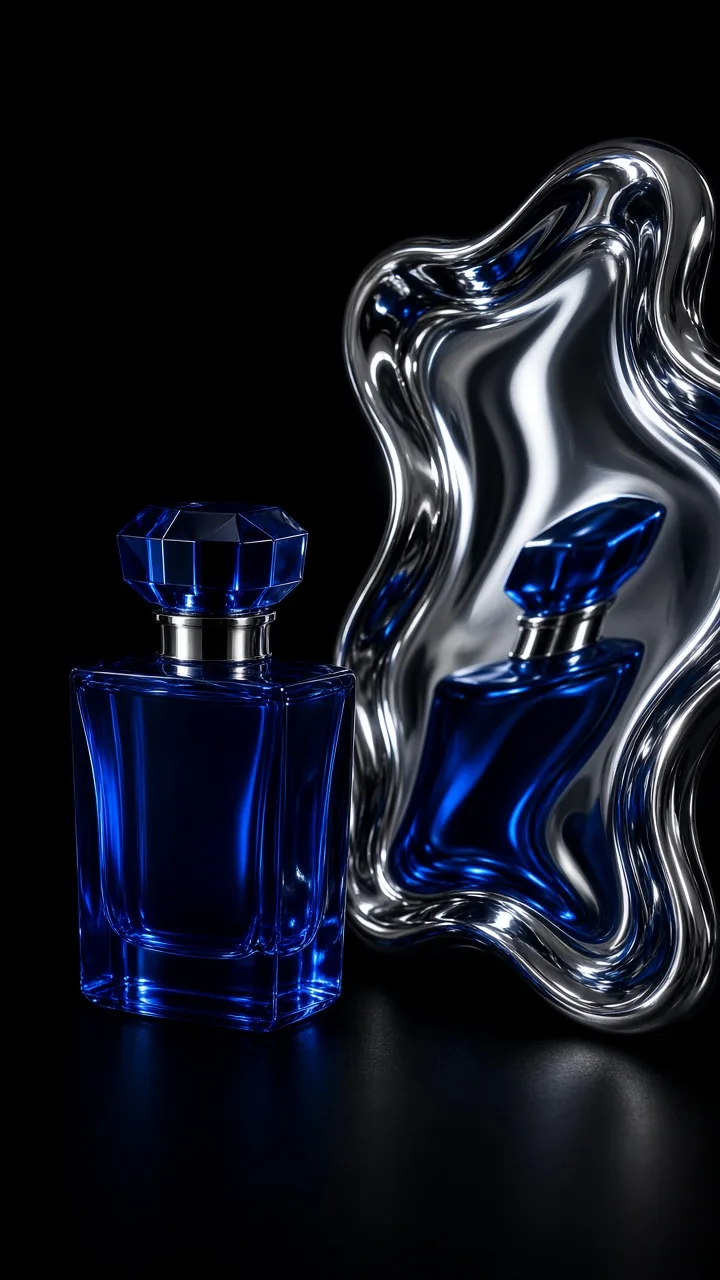
Set a saturated bottle against black or midnight blue. Drop a bright highlight on one shoulder of the glass, then let the chrome bend the bottle into a softer second shape below it. Keep the real bottle just off center and push the reflection low in the frame so it feels discovered rather than duplicated.
For a launch, shoot the bottle facing forward, then shoot a second frame with the cap turned a few degrees. Cut between the two in a two-second clip and the shift reads as intentional, giving a scent drop some drama while the packaging stays legible the whole time.
2. Soft tech with a rippled reflection
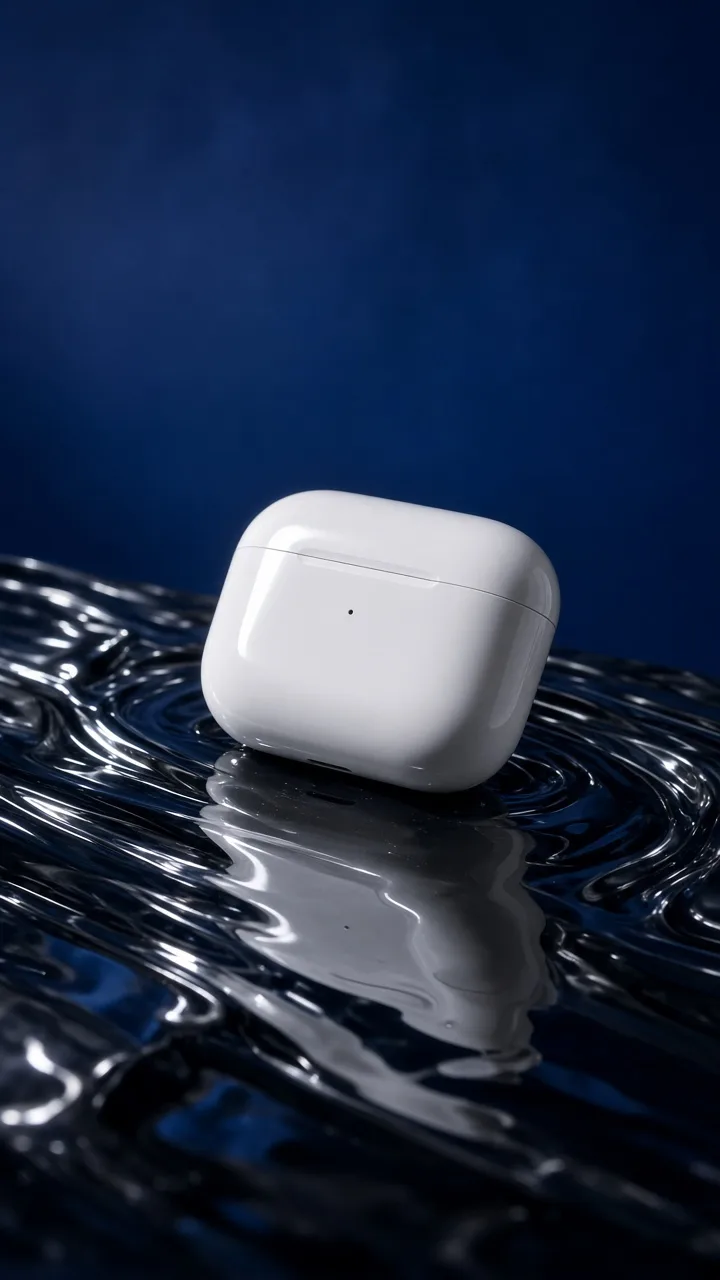
Small tech needs warmth. Put a headphone case, earbuds, or a slim charger on smoked acrylic and pick a background color that matches the product finish. The ripples keep the shot from feeling clinical while the object itself stays clean enough for a feature callout.
Keep fingerprints and dust off the surface before you shoot; they show up huge at phone size. Tilt the acrylic until the reflected lid catches a highlight, then crop tight. This look is built for an unboxing opener, a colorway drop, or an ad that needs exactly one benefit sitting next to the product.
3. Beauty compact with a split reflection
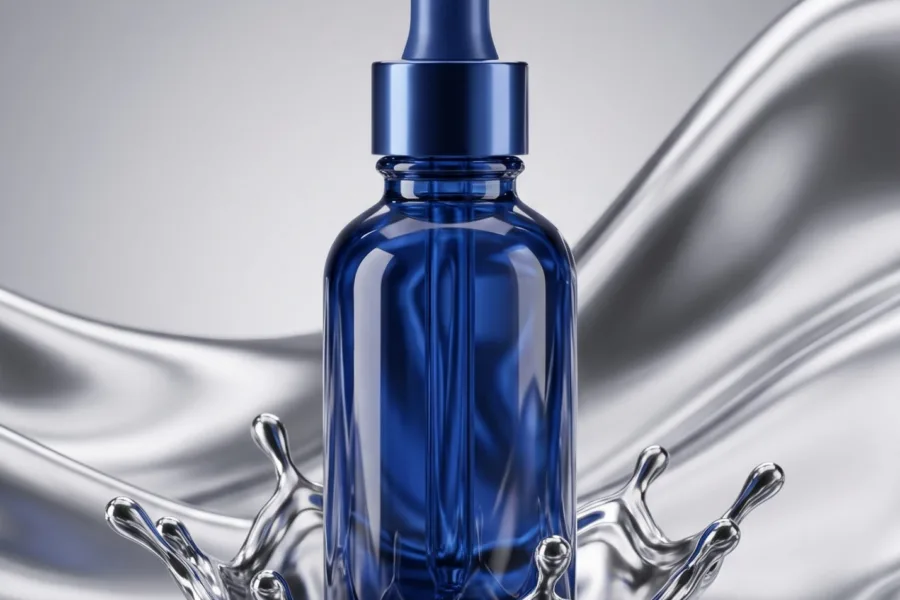
A compact, lipstick, or serum tube plays better against two narrow mirror strips than one big surface. Angle the strips so one catches the logo and the other catches the color. The result feels graphic, almost like an editorial beauty page, but still hands the buyer useful detail.
Use a pale background for complexion products and a darker one for metallic packaging. Avoid a reflection that doubles the logo exactly, since that reads as messy on a small screen. Crop close, leave a clean top corner for text, and use the frame as the closing still in a shade-range carousel.
4. Jewelry on a folded mirror card
For rings, watches, or sunglasses, trade the broad mirror for a folded card of polished metal. The crease draws a crisp line behind the product and throws a reflection with more shape than a flat tabletop ever could. It also gives tiny items enough scale to fill a full vertical frame.
Bring the product close to the fold but not directly on it, so the reflected metal frames the piece instead of swallowing it. This is a strong treatment for a gift guide, a limited-edition finish, or a detail-led retargeting ad aimed at people who already know the product.
Turn a still into a short phone ad
Build the first frame before you think about motion. Put the product close to the reflective material, leave a little dark negative space, and use one hard light instead of filling every shadow. Check it at phone size: if the product does not read in one second, simplify the reflection, not the product.
Here is a shot brief you can copy into your notes and run through top to bottom:
- Pick one feature the reflection should reveal: color, cap, texture, or silhouette.
- Set a vertical 9:16 frame and keep the product inside the center third.
- Use a wavy, rippled, or folded surface — flat mirrors rarely make enough tension.
- Shoot one clean hero still, then a second frame with a small light or mirror shift.
- Wipe the surface, check for dust and fingerprints, reshoot if needed.
- Animate only one movement: slide the product forward, tilt the mirror, or sweep light across the edge.
- End on the cleanest packshot so the label reads before any call to action.
If you would rather assemble that motion on your phone than in desktop software, Prodvid — our team’s iOS app — turns a product photo into a short video ad, which is handy when you only have the two hero stills and want the tilt-and-sweep clip without opening an editor.
The trick is restraint: one product stays the subject, and the reflection supplies the second beat. Add props only after the silhouette already works.
Key takeaways
- Keep the hero product sharp and legible; let a wavy, rippled, or folded surface do the cinematic work.
- One hard light and a dark background beat a fully lit, evenly filled frame every time.
- Leave quiet negative space on one side for price, date, or a three-word hook.
- Match the surface to the product: chrome for fragrance, acrylic for tech, mirror strips for beauty, a folded card for jewelry.
- Shoot two frames and animate a single movement to turn a still into a short vertical ad.