Candle product video ideas turn a simple jar, tin, or taper into a small sensory story. This guide is for candle makers and sellers who want seven practical ads they can shoot with a phone, a window, and a few household props.
The best candle videos show one clear transformation: an unlit object becomes a warm atmosphere. Start with an immediate visual hook, capture texture and flame safely, then end on a clean packshot. Keep each clip short, vary framing rather than props, and build a sequence viewers can understand without sound.
You will leave with seven concepts, a reusable 15-second shot list, phone-lighting guidance, and a pre-publish checklist.
Why do candle product video ideas work?
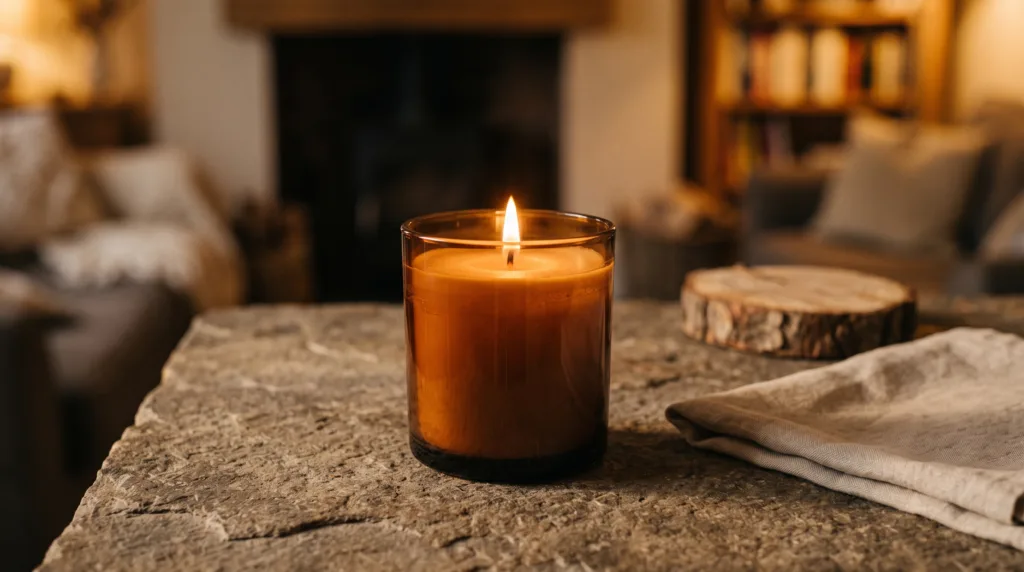
Candle videos work because the product creates a visible change in the scene. A match strikes, the wick catches, wax begins to glow, and a plain corner feels intentional. That gives a small brand a complete beginning, middle, and end without a studio or presenter.
The product also offers useful close-up details: glass reflections, label texture, wax color, a wooden wick, a lid, and the movement of flame. Pick one detail as the hero rather than trying to show everything in one ad. If you need a broader filming plan first, use this 12-clip product video shot list.
7 candle product video ideas to shoot this week
1. The match-strike reveal
Open on darkness or a dim tabletop. Strike the match close enough to fill the frame, cut as it approaches the wick, then reveal the full jar after the flame settles. The sudden light makes a natural hook.
Lock focus on the wick before recording. Keep the match moving away from the label so the product remains readable in the final shot.
2. The scent-note still life
Build a small scene from one or two physical scent cues: sliced citrus beside a fresh candle, cedar offcuts behind a woody scent, or folded linen near a clean fragrance. Use ingredients symbolically; do not imply an ingredient is in the candle unless that claim is accurate.
Begin with the prop in focus, then slide the phone sideways until the candle becomes sharp. This gives the fragrance an image without trying to film a smell.
3. The morning-to-evening transition
Record the same composition twice: once in cool window light with the candle unlit, then again after sunset with the flame on. Cut on the movement of a hand placing a mug or closing a book. The change communicates a use moment rather than just a product.
Keep the tripod position, focal length, and props unchanged. Continuity makes the transition feel deliberate.
4. The wax-and-wick detail
Move close enough to show the wax surface, wick construction, vessel rim, and lid fit. Use slow hand movement rather than digital zoom. A side-lit setup brings out embossed glass, ceramic glaze, or a textured paper label.
This idea suits a maker story. Pair the close-ups with one precise fact you can substantiate, such as vessel material or hand-poured production, rather than a vague quality claim.
5. The three-room routine
Show the candle in three believable places: beside a bath tray, on a desk, and on a bedside table. Keep each clip under two seconds and repeat one action, such as setting down the jar, to connect the sequence.
Choose rooms that match how the candle should be used. Never place flame near curtains, paper, dried flowers, or an unstable edge just to improve the composition.
6. The packing-table story
Film tissue being folded, a lid being placed, a protective insert closing, and the finished parcel. End with the candle outside the box so the viewer remembers the product, not only the packaging.
Record clean handling sounds if the room is quiet. The soft taps and folds can carry the edit without narration and make a small-batch process feel tangible.
7. The one-photo concept variation
When you have a strong packshot but not enough moving footage, test a concept before rebuilding the physical set. You can turn a candle product photo into a short ad in Prodvid, our iPhone app for AI product video ads. Treat generated motion as a draft to inspect: check the vessel shape, label, wick, shadows, and any flame behavior before publishing.
Use the result to judge an angle, pacing, or background direction. Keep a real packshot available whenever product accuracy matters.
How do you film a candle video on a phone?
Film in a dim room with one controlled side light, not in complete darkness. A window through a sheer curtain works in daytime; a shaded lamp placed to one side works after sunset. Tap and hold on the jar to lock focus and exposure, then lower exposure slightly so the flame keeps detail.
- Clean the vessel and remove dust from the wax.
- Place the candle on a stable, heat-safe surface with open space above it.
- Frame vertically if the primary destination is a short-form feed.
- Record the unlit packshot before introducing flame or melting wax.
- Capture each action in wide, medium, and close framing.
- Leave two seconds of stillness before and after every action for easier editing.
According to Apple’s iPhone 16 technical specifications (2024), the phone can record 4K Dolby Vision at 24, 25, 30, or 60 frames per second. For most candle ads, 30 fps is a simple baseline; use a higher frame rate only when you intend to slow a quick action such as a match strike.
According to TikTok Ads Manager specifications (2026), 9:16 is the recommended vertical dimension for non-Spark in-feed ads, with at least 540 by 960 pixels. Shoot wider than the jar so interface elements and captions do not cover the product.
For opening ideas that can work before a flame appears, adapt one of these 12 product video hooks for phone-shot ads.
A copyable 15-second candle ad script
Use this as a shot template, then replace the scent and setting with details that are true for your product.
- 0–2 seconds: Extreme close-up of the match strike or lid lift. On-screen idea: the use moment, not a discount.
- 2–5 seconds: Medium shot as the wick catches and the room warms.
- 5–8 seconds: Macro detail of wax, vessel, or label texture.
- 8–11 seconds: Lifestyle frame with one scent cue or routine prop.
- 11–15 seconds: Stable front-facing packshot with enough empty space for a factual product line.
Copyable voiceover: “When the day slows down, light [candle name]. [Accurate scent description] in a [accurate vessel detail], made for [specific use moment].”
Candle video pre-publish checklist
- The jar shape, color, lid, label, and wax match the item being sold.
- The flame is stable and the setup follows the candle’s safety instructions.
- The first two seconds contain motion or a clear visual change.
- Every ingredient, scent, burn-time, and production claim is accurate.
- The product stays visible when platform controls and captions are overlaid.
- The final packshot is sharp, steady, and long enough to read.
- Music, footage, fonts, and props are licensed or owned.
- The export has been watched once with sound and once muted.
FAQ
What should a candle video show first?
A candle video should show a change in the first two seconds. A match flare, lid lift, hand entering frame, or fast shift from an unlit to a lit scene gives the viewer an immediate reason to continue. Start with atmosphere only if the candle remains easy to identify.
How long should a candle product video be?
A focused candle product video can be 10–20 seconds when it presents one idea. That is enough time for a hook, two or three supporting details, and a packshot. Make a separate variation for another scent or use moment instead of forcing several messages into one edit.
How do you avoid flicker when filming a candle?
Reduce drafts, stabilize the phone, and separate the candle from other artificial lights that may pulse on camera. Test a short clip before the full shoot. If the image still flickers, change the room light or frame rate rather than trying to hide the problem with heavy editing.
Can you film a candle video in daylight?
Yes. Place the candle beside, not directly in front of, a window and use a sheer curtain to soften hard sun. Slightly underexpose the image so the flame remains visible. Daylight works especially well for citrus, linen, floral, and clean-home scent stories.
Key takeaways
- Build each candle ad around one visible transformation or one product detail.
- Use side light, locked exposure, stable framing, and a heat-safe setup.
- Connect scent to honest visual cues without implying unsupported ingredients.
- Record a clean packshot and check product accuracy before publishing.
- Use the 15-second script and checklist to create repeatable variations.