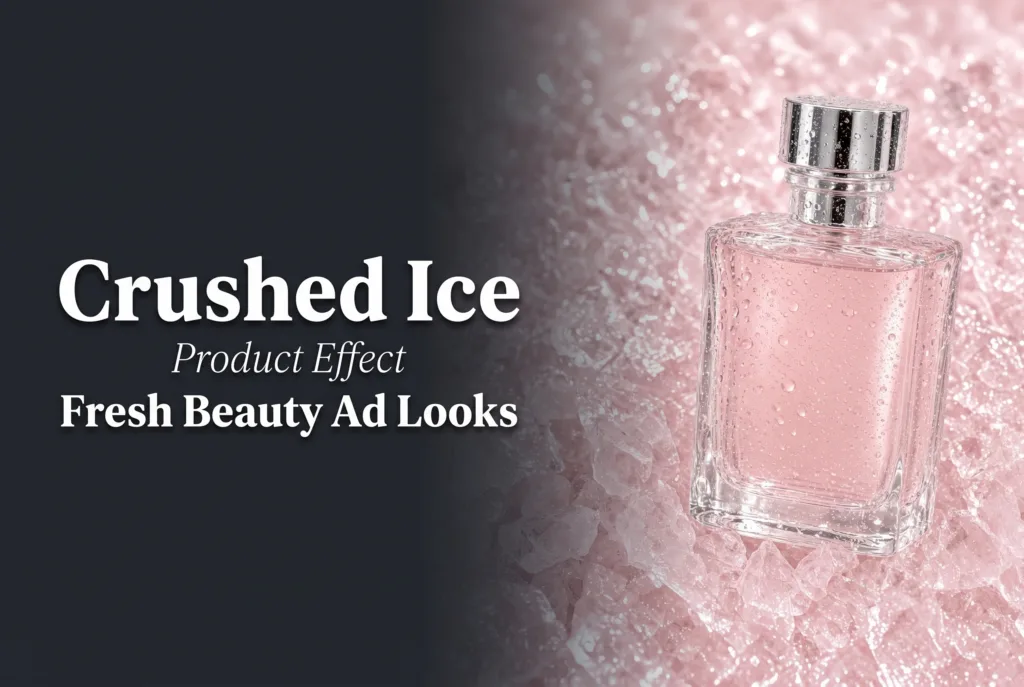
Crushed ice product effect styling surrounds a hero product with bright, irregular ice so the frame instantly suggests freshness, cooling and tactile detail. It works best for fragrance, skincare and glossy beauty packaging when the bottle remains unobstructed, the color palette stays controlled and motion is limited to one simple action.
This guide is for small brands and sellers filming on a phone. You will get four distinct looks, a practical shooting sequence, adaptable prompts and a final check that keeps the product—not the prop—as the focal point.
Why does the crushed ice product effect work?
The effect works because ice communicates temperature before a viewer reads anything. Its fractured surfaces create small highlights around glass, chrome and glossy plastic, while condensation adds a sense of immediacy. That makes the setup useful when the product story involves cooling, refreshment, hydration or a seasonal summer release.
Restraint matters. A single bottle, one color family and one lighting direction are enough. If ice covers the label or reflects more light than the pack, it has stopped supporting the story. The same principle appears in tactile product photography on a phone: texture should guide attention toward the product’s material details.
Format the master shot for where it will run. According to the TikTok Ads Help Center (2026), the recommended vertical dimension for non-Spark in-feed ads is 9:16 at 540 × 960 pixels or larger. Frame a little wider than your final crop so droplets, ice edges and the cap survive reframing.
Four crushed ice product effect looks to try
1. Blush ice for a soft fragrance reveal
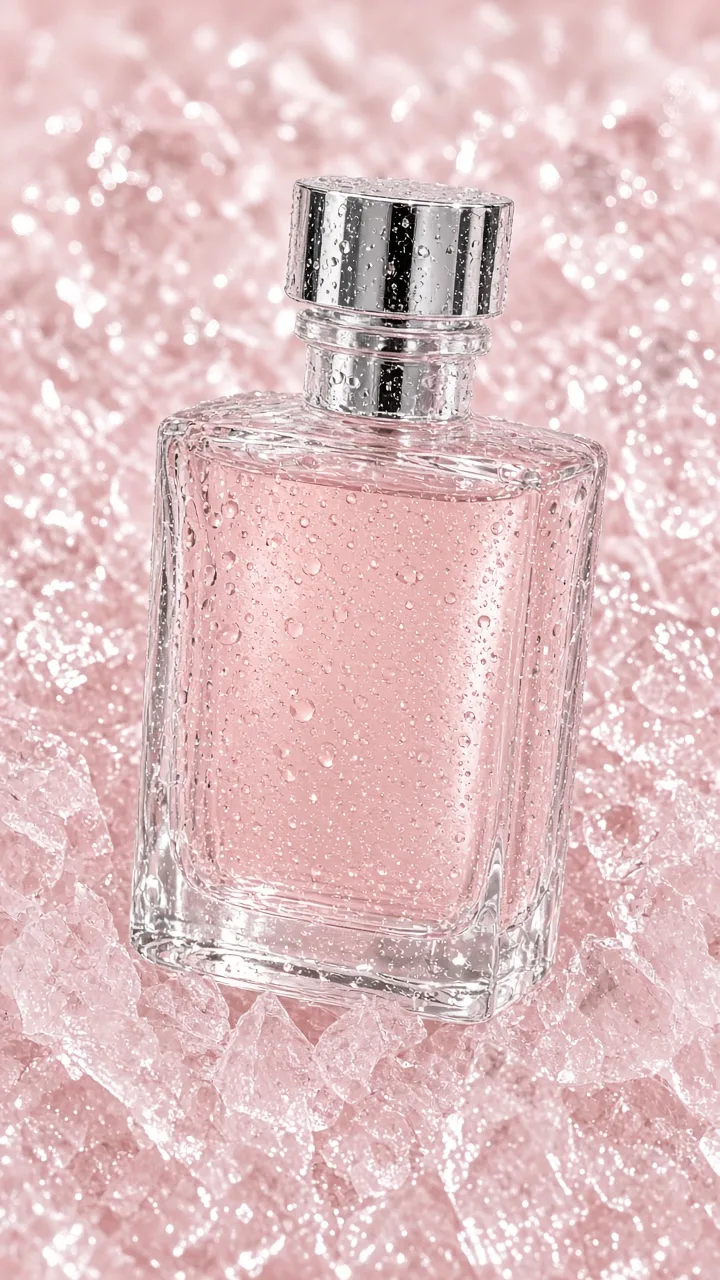
Place a clear or pale bottle upright on a waterproof pink surface. Arrange larger ice pieces behind it and smaller fragments along the sides, leaving an open channel in front of the label. A direct phone flash from slightly above creates lively points of light and gives the setup a candid beauty-editorial feel.
Use this treatment for perfume, body mist, lip oil or travel-size sets. For motion, start with a two-second still composition, then make one slow push toward the cap. Avoid spinning the bottle and moving the ice at the same time; competing actions make a small frame harder to read.
2. Clear condensation for a close product detail
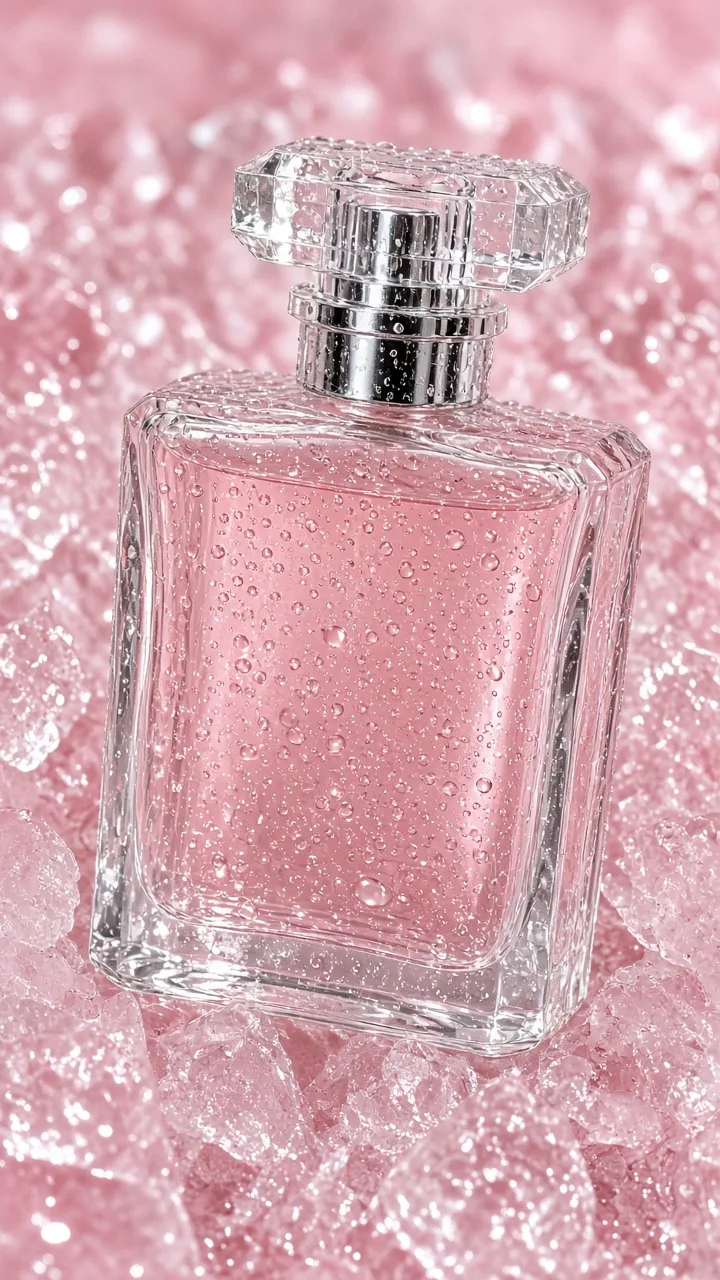
Move closer until the container fills most of the frame. Put one bright ice piece behind the cap and let foreground fragments fall slightly out of focus. Side light reveals the bottle edge; a small white card opposite that light returns enough brightness to keep the label legible.
This version suits serum, toner and silver-capped fragrance. It also pairs well with the close-detail approach in our water caustic product effect guide, but use crushed ice when texture matters more than moving reflections.
3. Citrus accent for a summer launch
Keep the ice clear and add only one citrus cue: a curl of lemon peel, a distant lime wedge or a narrow wash of yellow light. The accent should explain the mood, not imply an ingredient the product does not contain. A pale blue or white background keeps the visual fresh.
Record a simple light sweep across the cap, then hold the final label-facing frame. This creates a natural transition without splashing liquid near the phone. Repeat the setup across a range by changing the accent color while preserving camera position, ice height and lighting.
4. Midnight blue ice for a darker premium mood
Use fewer, larger ice pieces with blue light from behind and a soft neutral light from the front. The blue separates the ice from a dark background; the neutral light prevents black or silver packaging from disappearing. Leave a clean area beside the product if the final ad needs platform-added copy.
One slow camera move is enough. Slide the phone a few centimeters sideways or make a gentle push-in, but keep the bottle fixed. This treatment can support evening fragrance, active skincare or a winter variation without changing the basic tabletop setup.
How do you shoot the effect on a phone?
Shoot a clean, locked-off base clip before introducing movement. The base gives you a safe opening or end frame and exposes problems with the label, reflections or melting ice. Use a tray beneath the set, dry the phone area and handle glass with a cloth so fingerprints do not become the sharpest detail.
- Prepare the product. Clean the bottle, straighten the cap and choose the label-facing side.
- Build from the back. Place large ice pieces behind the pack, then add smaller pieces at the sides.
- Set one key light. Start at roughly 45 degrees to the product and adjust until the label is bright without glare.
- Lock exposure and focus. Hold on the product face in the phone camera so highlights do not pump during the move.
- Capture three clips. Record a still frame, a slow push-in and one detail close-up.
- Check at phone size. If the brand area is unclear, remove foreground ice before adding more light.
According to YouTube Help (2026), the standard computer player ratio is 16:9, while the player adapts to vertical and square uploads. Capture enough breathing room around the hero bottle to make both a vertical social cut and a wider product-page or YouTube version from the same setup.
What prompt can you copy for an AI variation?
Start from a straight, sharp product image. Describe where the ice belongs, how the scene is lit and what must stay unchanged. If you want to explore motion from one photo, you can turn a product photo into a short ad in Prodvid, our iOS app for AI product video ads. Review generated packaging carefully before publishing.
Copyable prompt: Upright [product type] surrounded by low crushed ice around the base and sides, front of package fully visible, [color] background, [soft side light/direct flash] creating crisp ice highlights, realistic condensation, clean beauty campaign composition, slow camera push, vertical framing, no extra products, no covered label.
Replace only the bracketed fields for the first variation. Then test one change at a time: ice color, lighting direction or camera movement. Keeping the remaining variables fixed makes it easier to identify which choice improves clarity.
FAQ
Can you make a crushed ice product effect without real ice?
Yes. Clear acrylic ice avoids melting and gives you more setup time, although it lacks natural condensation. Add a light water mist to the bottle—not the phone—and combine acrylic pieces with a chilled metal or glass surface if you want a colder visual cue.
Which products work best with crushed ice styling?
Clear fragrance, serum, face mist and glossy body-care packaging are strong candidates because their surfaces catch small highlights. Matte packs can also work, but they need stronger separation from the ice. Avoid the concept when cold imagery could contradict the product’s use or storage instructions.
How do you keep a label readable through reflections?
Turn the bottle until the brightest reflection moves off the label, then place a white card near the darker side. Keep ice below the front edge of the pack and lock phone exposure on the label. A tiny camera adjustment usually works better than adding several lights.
What motion works best for an icy beauty ad?
A slow push-in, short side slide or single droplet moving down glass is enough. Choose one motion and finish on a steady product view. Small, controlled movement preserves the tactile mood while giving viewers time to recognize the bottle and its shape.
Key takeaways
- Use ice to communicate cooling or freshness, not as decoration without a product reason.
- Keep the label clear by stacking ice behind and beside the package.
- Choose one palette, one lighting direction and one camera move per variation.
- Shoot a wider master frame so you can create vertical and landscape crops.
- Check every final clip at phone size before publishing.
Sources
- TikTok Ads Help Center: Auction In-Feed Ads specifications (updated June 2026).
- YouTube Help: Recommended upload encoding settings (accessed September 2026).