Shadow play product ads use one hard light and a deliberate shadow to turn a plain packshot into a graphic campaign scene. Small brands can make the look with a phone, a bright lamp or sunlight, and a simple cutout, while keeping the product clear enough for viewers to understand at a glance.
This guide is for sellers who want dramatic product footage without building a full set. You will get four setups, copyable prompts, a phone shooting method, and checks that stop the shadow from swallowing the product.
Why do shadow play product ads work?
Shadow play works because one recognizable shape can establish mood, depth, and direction before any copy appears. A window grid suggests late afternoon. Narrow stripes feel quick and modern. A leaf silhouette can make skincare feel fresh. The product remains the subject, while the shadow supplies the setting.
Clarity still comes first. Show the outline, material, and one important feature of the item. If the dramatic area hides the cap, texture, sole, or opening mechanism, rotate the product or move the shadow rather than brightening the entire scene.
4 shadow play product ad setups to try
1. Window-frame fragrance reveal
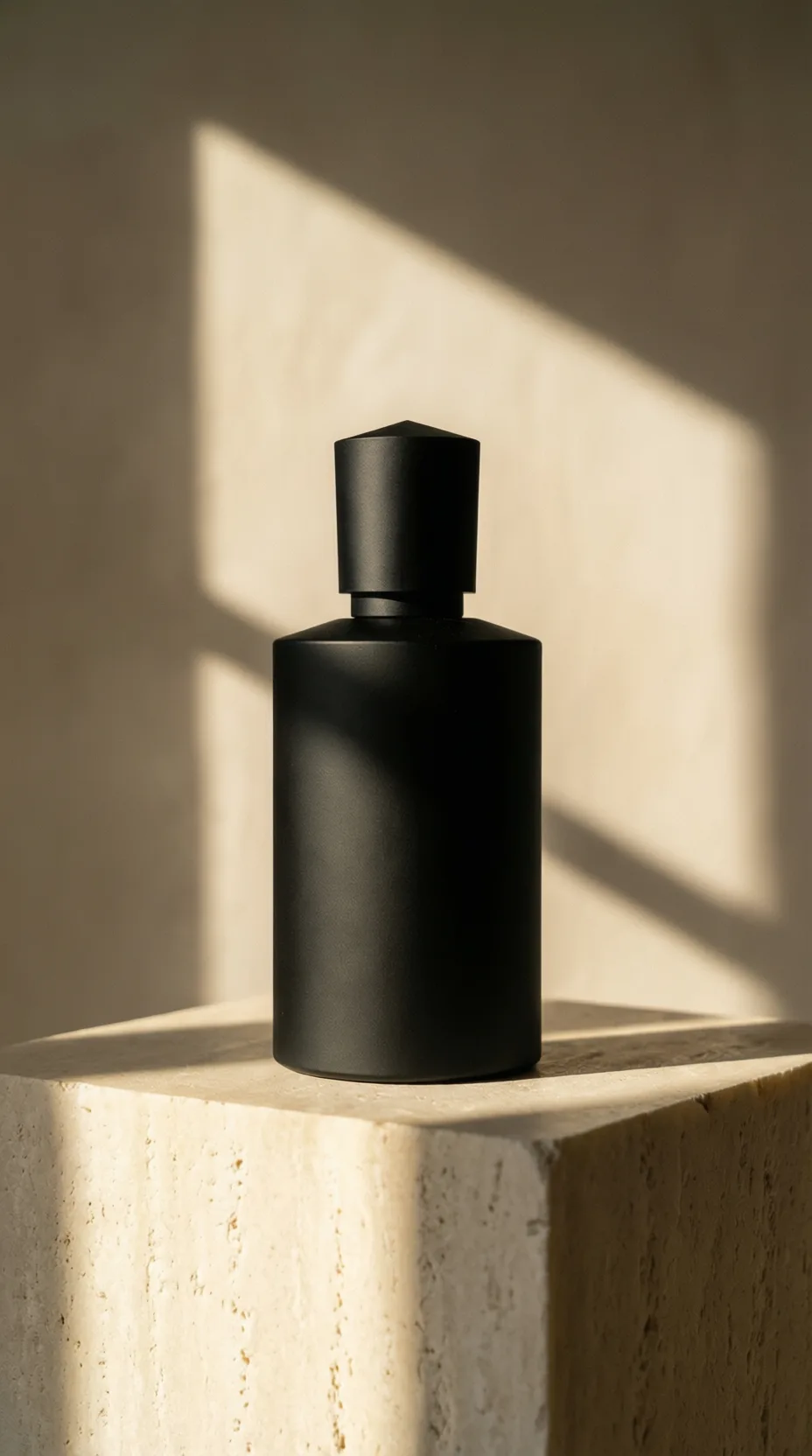
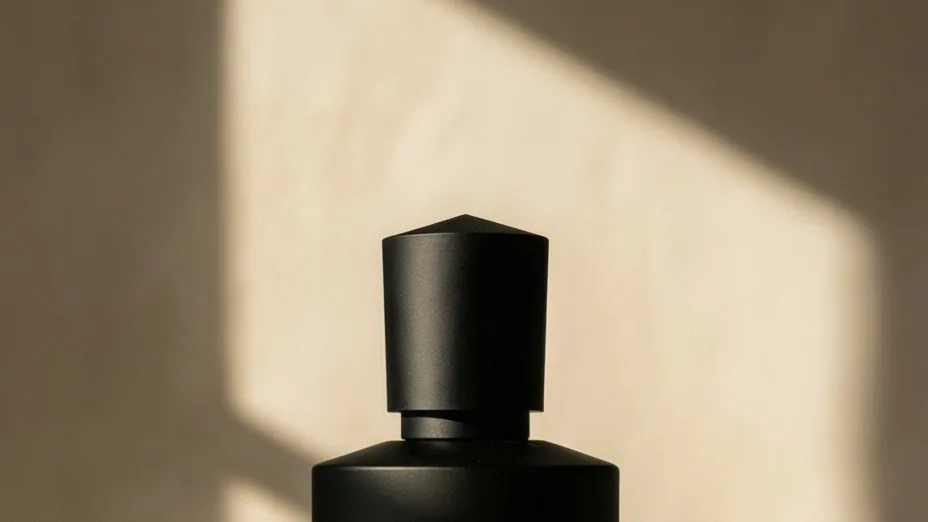
Set a bottle on a matte block beside a warm wall. Cut a rectangular frame from card, or use a real window edge, and place it between the light and background. Let one bright section touch the shoulder of the bottle while its front remains readable.
Shoot a locked opening frame, then make a slow six-inch push toward the product. Avoid panning across the whole set; the changing crop is enough movement. This restrained setup suits fragrance, candles, dark glass, and small home objects.
Copyable scene prompt: Editorial product scene with a dark glass bottle on a warm stone block, one crisp rectangular window shadow crossing the wall, late-afternoon hard light, generous negative space, realistic materials, no words, no logo, vertical composition.
2. Diagonal-blind sneaker launch
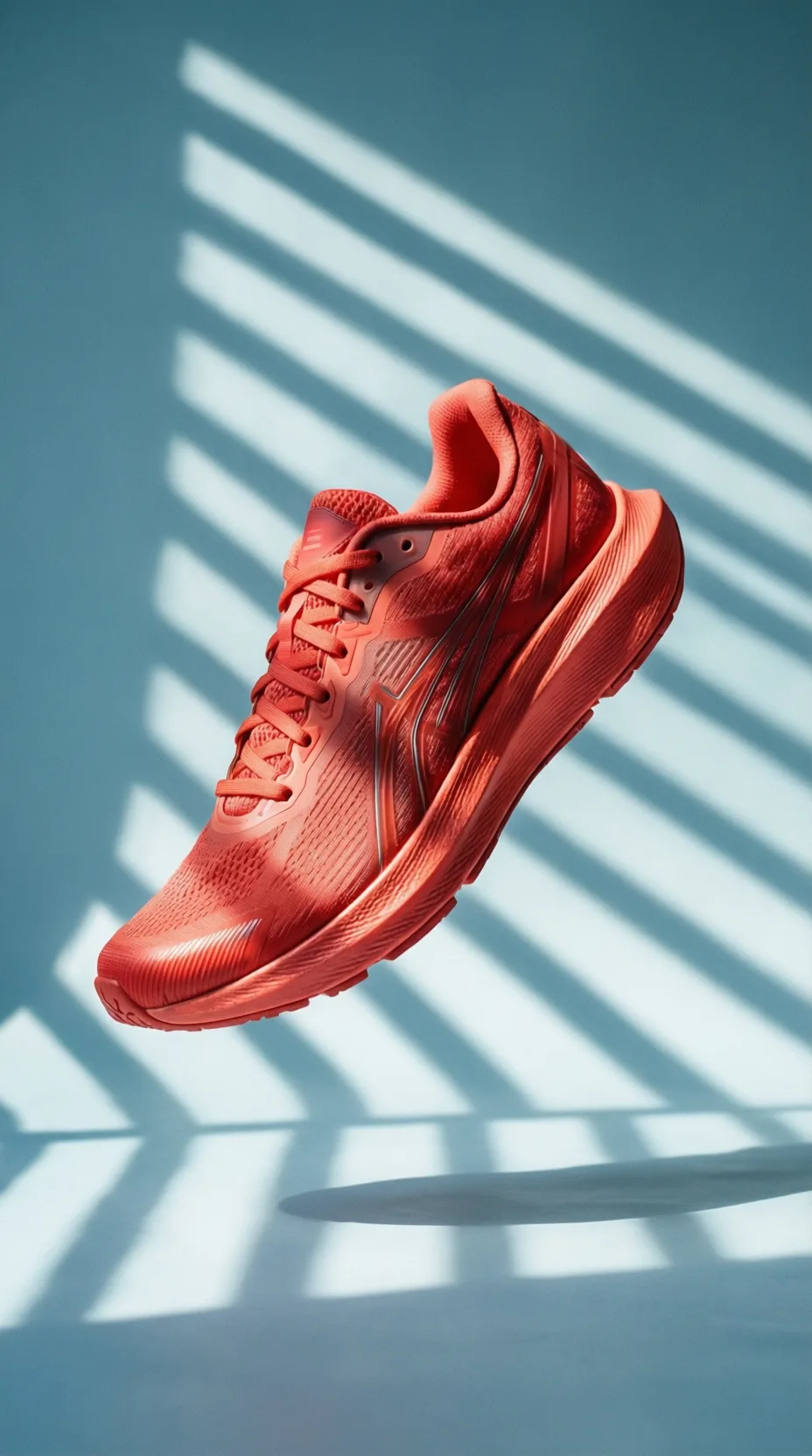
Use a slatted blind, cooling rack, or strips cut from black card to cast parallel bands. Turn the pattern diagonally so it appears to travel through the frame. Keep the toe box, fastening, or side profile in a bright gap rather than under the darkest stripe.
Copyable scene prompt: Coral running shoe above a pale blue studio surface, crisp diagonal blind shadows across the background and edge of the shoe, hard daylight, energetic editorial product photograph, visible texture, no words, no logo, vertical composition.
3. Leaf-shadow skincare detail
Choose a single leaf with a simple silhouette and hold it well away from the product. Moving it closer to the light usually enlarges and softens the shape; moving it nearer the backdrop makes the edge more defined. Test both before recording.
Place a serum or sunscreen bottle on one colored tile and keep the label-facing area unobstructed. A gentle movement of the leaf can add life, but the product should stay still. For more beauty-specific framing ideas, use these skincare product video concepts as companion shots.
Copyable scene prompt: Clear skincare bottle on a deep blue tile, one controlled leaf shadow framing rather than covering the bottle, hard midday light, precise glass highlights, minimal summer beauty set, no words, no logo, vertical composition.
4. Circular spotlight for a bold first frame
Cut a clean circle in thick card and project it onto a bright background. Place a bottle, speaker, or cylindrical package partly inside the circle. The product should break the edge of the light so its outline feels layered, not pasted onto a flat disc.
This setup gives you an obvious opening: begin in darkness, reveal the circle, then bring in the product. You can make the reveal physically by moving the card, or edit together two locked frames. Keep the camera fixed so the transition aligns.
Copyable scene prompt: Brushed metal bottle on a saturated yellow block, hard circular spotlight forming a clean halo behind it, graphic high-contrast studio lighting, polished realistic material, no words, no logo, vertical composition.
How do you shoot shadow play product ads on a phone?
Lock the composition before adding motion. Hard shadows expose every small change in angle, so a stable phone and one controlled light produce cleaner results than a complicated moving setup.
- Clean the product and lens. Hard light makes dust, fingerprints, and haze obvious.
- Build the background. Use plain card, a wall, fabric without wrinkles, or one tile.
- Choose one shadow maker. Try a card window, parallel strips, one leaf, or a circular cutout.
- Move the light for edge control. Increase the distance between subject and background for more separation; adjust the cutout until the edge is intentional.
- Lock focus and exposure. Check the product, not the brightest patch, and lower exposure if highlights lose texture.
- Capture three clips. Record a still hold, a slow push-in, and one detail shot. This compact product video shot list can fill any missing angles.
- Review at thumbnail size. Confirm that the item remains recognizable before dismantling the setup.
Copyable pre-shoot checklist:
- Product face and defining feature are visible.
- Only one dominant shadow pattern is in the frame.
- Bright areas retain texture; dark areas are not muddy.
- Background edges, stands, tape, and dust are hidden.
- Opening frame makes sense without sound or text.
- There is negative space for platform copy added later.
If you prefer to animate a still rather than film every movement, you can turn a product photo into a short video ad with Prodvid. Prodvid is our team’s iOS app; keep the generated product shape, materials, and shadow direction under the same close review you would give a phone-shot clip.
How should you prepare a shadow ad for publishing?
Frame for the destination before you shoot. According to TikTok for Business (2026), the recommended vertical format for non-Spark in-feed ads is 9:16 with dimensions of at least 540 by 960 pixels. Leave breathing room around the product so interface elements do not compete with it.
Export checks matter as much as the set. According to TikTok for Business (2026), non-Spark ad files can be up to 500 MB and use formats including MP4 and MOV. A practical default is to export an MP4, watch the finished file on your phone, and confirm that dark gradients have not become blocky.
Judge the first frame without audio. It should show the product, the shadow idea, and enough contrast to survive a small feed preview. Add copy only after the image works on its own. This keeps your production file reusable across organic posts, listings, and paid placements.
FAQ about shadow play product ads
What light makes crisp product shadows?
A small, direct source placed farther from the shadow cutout usually makes crisper edges than a large softbox. Sunlight can work, but it moves during the session. A focused lamp is easier to repeat. Remove diffusion first, then adjust the cutout distance until the edge looks deliberate rather than fuzzy.
Can you make shadow play product ads without sunlight?
Yes. Use a bright directional lamp in a darkened room and prevent other lights from filling the shadows. LED panels can work if they are not heavily diffused, while a focused spotlight often creates the strongest edge. Check heat around card cutouts and keep flammable materials away from hot bulbs.
How long should a shadow play product video be?
Make it only long enough to complete one visual idea. A reveal, short hold, and detail cut can form a useful compact edit. Instead of stretching a weak shot, capture several brief clips and assemble versions with different openings. The right duration depends on placement and message, not the lighting effect alone.
How do you stop the shadow from hiding the product?
Place the defining feature inside a bright gap or at the boundary between light and shade. Rotate glossy products until reflections describe their shape. Review the frame in grayscale or at thumbnail size; if the item becomes an anonymous silhouette, move the cutout before reducing the overall contrast.
Key takeaways
- Use one hard light and one shadow shape so the idea reads immediately.
- Keep a defining product feature clear, even in the darkest setup.
- Capture a hold, a slow move, and a detail clip before changing the set.
- Write shadow prompts with subject, surface, shadow position, light quality, and exclusions.
- Check the opening frame and final export on a phone before publishing.
Sources
- TikTok for Business: TikTok Auction In-Feed Ads specifications (accessed 2026).